
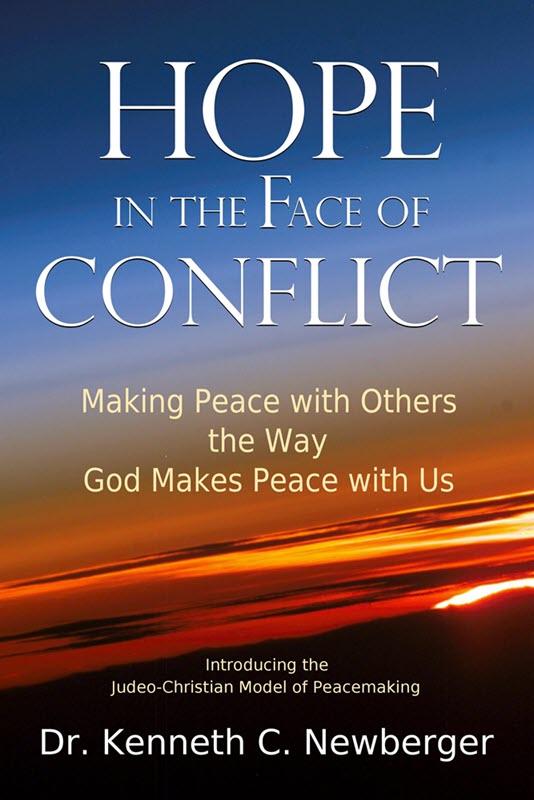
Christian marriage counseling integrates the truths of Scripture with proven principles of conflict resolution and relational healing. Rather than treating faith as irrelevant — or avoiding it altogether — Christian counseling views your faith as a powerful resource for restoring your marriage.
My approach is grounded in the Judeo-Christian model of peacemaking: learning to make peace with others the way God makes peace with us. This model applies wherever conflict exists — including between husbands and wives. This is not merely theological theory. It is a practical process that works. In marriage, it helps couples:

Arlington is one of the most educated and professionally driven communities in the country. It is also a place where many marriages quietly run out of margin.
Couples here often work demanding jobs in government, the military, contracting, law, consulting, and technology. Many leave home early, return late, and spend large parts of the week driven by deadlines and obligation. In the middle of keeping careers and family life moving, the marriage itself can slowly start receiving whatever time and energy happen to remain.
In Arlington, professional identity carries unusual weight. Careers are not just jobs here. They shape schedules, stress levels, social circles, and even how people see themselves. That pressure rarely stays at the office. It follows couples home at night and into weekends that never fully feel like weekends.
Many couples describe a marriage that still functions on the surface. The bills are paid. The children are cared for. Responsibilities are divided fairly. Yet underneath all of that efficiency, the relationship itself can begin to feel emotionally thin. Conversations become transactional. Small resentments sit unresolved longer than they should. Couples who once felt close begin feeling more like teammates managing logistics.
Dual-career households are common throughout Arlington. In many marriages, both spouses are carrying demanding workloads at the same time. The household may operate efficiently while the relationship itself receives very little attention.
A Harvard Business School study on dual-career marriages captured this dynamic well. One physician described how she and her husband handled family responsibilities:
“I think especially because my husband and I do such a good job of making sure we share the responsibilities — it involves a lot of dividing and conquering, and as a result we don’t see each other.”
That experience resonates with many Arlington couples. Often the issue is not constant conflict. It is fatigue, overscheduling, and months or years of operating in survival mode.
Arlington is home to many military families, and military marriages carry pressures that civilian families do not always see from the outside. Deployments, relocations, disrupted routines, and extended separations place strain on even strong relationships.
Reconnecting after a deployment is often harder than people expect. Both spouses have adapted to different responsibilities while apart. Sometimes communication patterns changed long before anyone realized it. Couples can find themselves trying to rebuild emotional closeness while simultaneously catching up on ordinary life.
Many people who live in Arlington moved here for career opportunity. Over time, however, the distance from parents, siblings, longtime friends, and familiar support systems can become more significant than expected.
When difficult seasons arrive, couples are often handling them without much nearby help. There may be no relatives available to step in with childcare, no lifelong friendships nearby, and few opportunities to slow life down long enough to reconnect. As a result, the marriage can end up carrying emotional weight that earlier generations often distributed across extended family and community.
Researchers at the Family Institute at Northwestern University have noted this growing pressure inside modern marriages: “A big challenge in current marriages is this expectation that the person we’re partnered with is going to be our everything — our family, our best friend, our work mentor. So much pressure is put on a relationship.”
Arlington has no shortage of therapists and counseling practices. Yet many couples arrive frustrated after spending months or even years in counseling that produced little measurable change.
One common complaint is the feeling that sessions drift without direction. A therapist writing in Psychotherapy Networker described what she called “Groundhog Day therapy” — couples spending months revisiting the same conflicts without meaningful progress.
Others describe confusion rather than clarity. One individual explained the experience this way: “I’ve been in therapy for over four months and I find myself more confused than ever. There is no objectivity and everything is about ‘how do you feel?’ I wish the therapist could just directly tell me what to fix.”
The issue of perceived bias also surfaces frequently. When one spouse believes the therapist has aligned with the other, trust inside the process can deteriorate quickly. As one analysis of failed couples counseling observed: “If one partner feels like the therapist is aligning with the other, it can destroy the trust needed for honest dialogue.”
And in some situations, counseling conversations simply fail to translate into daily life. One spouse described years of sessions this way: “Every session, to the therapist, he was so earnest. And then we would walk out and nothing — I mean nothing — was different.”
What most of these couples were looking for was not more conversation. They wanted someone to identify what was actually wrong — and help them fix it.
My approach is structured, goal-oriented, and grounded in twenty-five years of working with people in conflict. Since 2013 I’ve worked with over 500 couples. Here is what some of those couples have said:
“Our 29-year marriage was on the verge of a total breakdown. We turned to Dr. Newberger for help. He provided a thorough, thoughtful, and rigorous process. He taught us a whole series of new skills that allowed us to better understand each other’s perspective, empathize, and communicate more effectively. Our marriage is stronger than ever! His fees were very reasonable, and the outcome was priceless.”
“We continue to heal. You made me confront things and answer hard questions that I avoided for years. Your coming alongside us was a Godsend.”
Are you ready to take the first step?
Call 703-483-0031 to speak with Dr. Newberger without charge or obligation about your situation. Or, if you prefer, learn more about his process →