Chapter 3
Attachment Styles in Marriage: How Secure Are You?
What are the attachment styles in marriage? There are four: secure, anxious, avoidant, and disorganized (also called disoriented). Your style is the strategy you fall back on to feel safe with your spouse. A secure bond is the goal, and the other three can move toward it with practice.
At the heart of every marriage is a simple question: Can I count on my spouse to be there for me? When the answer is a confident yes, we relax into the relationship. When the answer is uncertain, we protect ourselves – and the ways we protect ourselves can quietly damage the very bond we long for.
Researchers call these patterns attachment styles. Your style is simply the strategy you fall back on to feel safe with the person closest to you. This chapter will help you name your pattern and, more importantly, take practical steps toward a more secure connection. Here is how it flows:
- A short quiz on how attached and secure you feel with your spouse.
- A brief description of the four types of attachment.
- Real-life illustrations of each type.
- Exercises the two of you can do to become more secure with each other.
Take the Quiz
Read each statement below and check every one that is true for you. Answer honestly – there are no right or wrong responses, only your own experience. When you are finished, tap Score my quiz and your results will appear.
Check each statement that is true for you.
Box A
Box B
Box C
Box D
How Your Score Works
The statements in Box A measure how secure you feel. The statements in Boxes B, C, and D measure three different ways of feeling insecure. Because the three insecure boxes together outnumber the single secure box, your secure count is multiplied by three so the two sides can be compared fairly.
- Secure score – your count in Box A, multiplied by 3.
- Insecure score – your counts in Boxes B, C, and D, added together.
Then compare the two. How secure do you feel in the relationship compared to how insecure you feel? The box where most of your answers land points to your dominant pattern – Secure, Anxious, Avoidant, or Disorganized.
The Four Attachment Styles in Marriage
A. Secure Relationship
- Your self-image is positive and your view of your spouse is positive.
- You are there for each other.
- Love is mutual and consistent.
- You comfortably engage with each other.
- Responding to and meeting each other's needs is not a burden.
- You feel safe, emotionally secure, and happy in the relationship.
B. Anxious Relationship
- Your self-image is negative while your view of your spouse is positive.
- Your spouse is not there for you (not consistently available or responsive to your needs).
- You are upset because of the separation.
- You worry about rejection and abandonment.
- You want more attention.
- You are angry and criticize your spouse because you feel distant, dismissed, or unimportant.
- You're clingy, demanding, controlling, and/or manipulative.
C. Avoidant Relationship
- Your self-image is positive while your view of your spouse is negative.
- You are very independent and self-directed.
- You detach from emotional engagement.
- You are uncomfortable sharing your emotions.
- You provide little to no emotional support for your spouse.
- You are threatened by too much closeness and are relieved by separation.
- You are more interested in work, projects, or activities than the relationship.
D. Disorganized Relationship
- Your self-image is negative and your view of your spouse is negative.
- You are both anxious and avoidant at the same time.
- Imagery: hugging your spouse with your right arm while inserting your left arm between the two of you to make sure your spouse doesn't get too close.
- You want intimacy but simultaneously fend it off.
- You are filled with confusion or fear. You get a profound feeling of instability. You don't know which way to turn.
I need to know he's there and get so angry when he isn't. But then when he comes closer, I can't bear to be touched, so I withdraw.
— One woman describing the disorganized pattern
Illustrations of Each Type
A. From Insecure to Secure
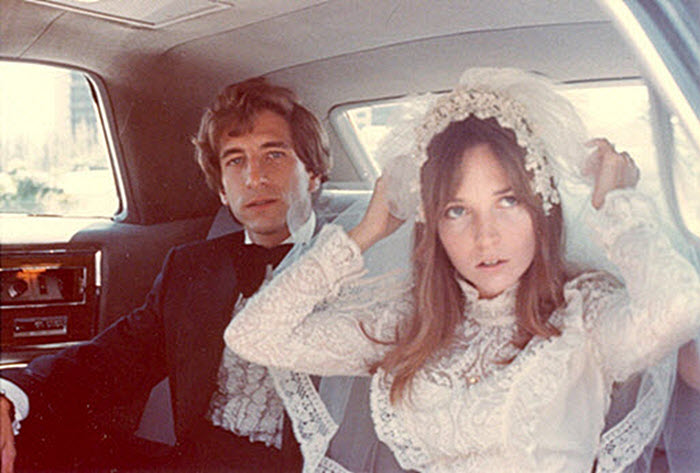
Shortly after marriage, I came to realize that my wife, Mary, was a more secure person in herself than I was. At night, when she was asleep, I used to think to myself that she “breathed” more securely than I did. That was almost 50 years ago.
Over time, Mary's unwavering love, respect, and loyalty toward me gave me a sense of security I would not have experienced otherwise.
Case in point: some 20 years ago, I volunteered to teach a class of adults. Mary was there. Driving home after the class, she uncharacteristically told me what a poor job I did. She had heard me effectively speak hundreds of times to larger groups of people. But I always went in with prepared notes in those more formal settings. In this situation, I took a more “off-the-cuff” approach.
This tiny slice of life is almost not worth talking about. I mention it not because of Mary's reaction to me, but because of my reaction to her. I did not feel attacked. I did not feel put down or diminished. Stated otherwise, it was not the response of an insecure person.
How can this be? Because I knew that Mary's comments did not come close to disturbing our underlying bond. She always had my best interests at heart. Always. So what is there to feel insecure about or defend against when someone loyal to you wants you to shine?
— Dr. Ken Newberger
B. Anxious Attachment
In Britain, a young woman compiled the following list of 22 rules for her boyfriend. These rules show how severe anxious attachment can be. The list is reproduced below.
- You are NOT to have a single girl's phone number.
- You are NOT to follow them on any social media (including Instagram, Snapchat, and Twitter).
- You are NOT to hang out with Keegan (including his house or anywhere in public).
- You are NOT to go to Honda without me.
- You are NOT to hang out with your friends more than two times a week.
- You are NOT to look at a single girl.
- If girls come up to you at any place or anytime, you are to WALK away.
- Mo is NOT to hang out [with] us every time we hang out.
- You are NOT to ask for head.
- You are NOT to get mad at me about a single thing ever again.
- You are NOT to bring up Tyler, Noah, Deven, or Josh ever again.
- You are NOT allowed to drink unless I am with you.
- I am allowed to do a phone check whenEVER I please.
- If we move in, there are NEVER to be girls at our house.
- If we move in together, your friends will RARELY be allowed over.
- If I catch you around girls, I kill you.
- You are NOT to ditch me for your friends.
- Austin does NOT control when I hang out with you!
- We are to go on a legit date once every two weeks at least.
- If I say jump, you say “how high, princess.”
- You are to make sure you tell me you love me once a day at least, so I know you're not messing around.
- You are to NEVER take longer than 10 minutes to text me back.
C. Avoidant Attachment

A person on Reddit described the avoidant pattern this way:
I was talking to a friend about how I seem to lose interest in someone once they start showing interest in me, and she suggested I read up about avoidant attachment style.
After learning what it is, my past relationships just make sense. I won't get into full detail, but the patterns of my behavior are just consistent with the signs. I'm utterly scared of getting close to someone even though that's all I really want. I tend to depend on myself and myself alone.
When things start to get serious, I shut down and try to leave asap. I become overly critical of my partner and our relationship as a whole to justify the break-up. I keep most of my relationships and friendships shallow.
On one hand, it actually feels good to know that there's a term for this. At least now I know what's wrong with me and I can recognize the patterns of my own behavior. It's just horrible and I don't want to be like this anymore. I want to be able to get close to people.
— Posted on Reddit
D. Disorganized Attachment
Asked what disorganized attachment feels like, one person answered:
A rollercoaster. I want to be close to people, but I feel repulsed by the idea of vulnerability – unless I'm fawning [being overly attentive], in which case all thoughts of my own self-preservation go flying out the window. I naturally put distance between people when things start becoming more intimate, and I don't even notice it. I constantly feel alone and want to stop feeling that way, but I feel panicked when I try to pursue closer relationships. I am extremely sensitive to perceived rejection; completely normal comments can make me spiral for days because I perceived them as an abandonment. Alternating between wanting to lash out at people I care about, wanting to run as far away as I can get, and wanting to cling to them and never let go – and constantly arguing with myself over which response is ideal.
— Posted on Reddit
Watch: Why a Secure Bond Matters
The following video, created by Dr. Sue Johnson and Dr. Ed Tronick, contains two eye-opening examples. It shows what happens when (a) there is a break in a secure bond between a mother and child, and (b) there is conflict between an anxious wife and an avoidant husband. It captures the deep human need for a secure bond in our most important relationships.
Key Takeaways
- Attachment is about one question: can you count on your spouse to be there for you? How you answer shapes how you behave in the relationship.
- There are four patterns – secure, anxious, avoidant, and disorganized. The insecure patterns are protective strategies, not character flaws, and they can change.
- Security grows through consistent, responsive care. Small daily gestures of love and affection are one of the surest ways to build it. (See the exercise in the previous chapter entitled, "Gestures of Love and Affection).
Discuss Together
Set aside some quiet time and talk through the following as a couple:
- Discuss the video as it relates to the two of you.
- Share your responses to the quiz. Which box captured most of your answers – and does that pattern ring true for how you show up in your marriage?
- Do you relate to any of the descriptions or illustrations?
- For each statement you checked in Box A, let your spouse know why you appreciate that action.
- When you feel insecure with your spouse, what do you tend to do – pursue harder, pull away, or both at once?
- In light of Boxes B, C, and D, what could your spouse begin doing to help you feel more secure in the relationship? Discuss any blocks that prevent that from happening.
An Exercise: Reach and Respond
Knowing your pattern is a start, but insight by itself changes little. A secure bond gets built the slow way, through small acts of care repeated until your spouse stops wondering whether you will be there. The two-week practice below is a good next step. One of you reaches; the other responds. (This builds on the Gestures of Love and Affection exercise from the previous chapter.)
- Name your one thing. Each of you picks the one action that, more than any other, tells you your spouse is there for you. Keep it specific. And say it as a request, not a grievance: “When you _____, I feel I can count on you.”
- Respond every day. For the next two weeks, do your spouse's one thing at least once a day. It doesn't have to be big; honestly, small and consistent works better. Trust grows from the repetition itself.
- Check in for a minute at night. Take turns asking, “On a scale of 1 to 10, how ‘there for you’ did today feel, and what is one moment I got right?” The score lets you watch the trend over two weeks. The second question keeps you both looking at what's working instead of what isn't.
If you want to go further, try naming the fear underneath the frustration – what you're most afraid it means about you when you feel unseen – then asking your spouse, plainly, for the reassurance you're after. That's tender territory, and most couples do it best with a professional alongside them.
Struggling in your marriage? There is hope.
Call Dr. Ken Newberger at 703-483-0031 to talk about your situation free of charge. Or, if you prefer, learn about his unique process.