
Herndon Marriage Counseling Alternative
Stop Having the Same
Argument Over and Over
Break the Cycle and Reconnect
A Conflict Resolution Approach to Saving Your Marriage
Most marriage counseling has no finish line. You talk, the hour ends, and the same argument is waiting at home. My approach is built to do the opposite: as a conflict resolution specialist, I work to find what's actually driving the conflict between you and give you a clear path out of it.
That's the key difference — I'm a conflict resolution specialist, not a therapist. Traditional counseling is often non-directive, with the counselor staying neutral. But you aren't neutral about saving your marriage, and neither am I. From the first call, the goal is reconciliation, not open-ended conversation.
That distinction also means no labels. To bill insurance, a therapist must assign a psychiatric diagnosis to at least one spouse — early, and often inaccurately — and it stays on your permanent record. You came for help with your marriage and leave labeled. My work carries no diagnosis and no medical record.
It also means real depth. Each of you completes the Conflict Analysis Tool, an X-ray for your relationship that reveals the patterns and root causes. I've used it with more than 1,000 individuals.
And that's where preparation comes in. Before our second joint session, I spend several hours reviewing everything I've gathered about your relationship and building a clear agenda — so the real work of rebuilding can begin the moment we meet again.
That same investment of time carries into every session that follows. Even once we're underway, I'll typically spend an hour or more preparing between sessions — not the ten or fifteen minutes most counselors manage.
Our time together isn't rushed either. A “therapy hour” runs 45–50 minutes; mine is a full 60. And I'll never open with, “So, what do you want to talk about today?” I arrive with a focused agenda drawn from what you've already told me — then build on it as I learn more from both of you in the room.
The result is focused, faster, and built around your actual relationship.
If your marriage is struggling, the first step is free. Call 703-483-0031. Or, if you prefer, click to learn more about my process

Living in Herndon VA
Community Overview
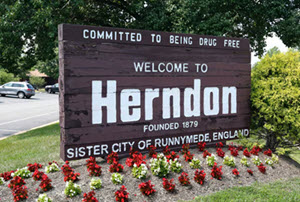
Herndon sits in Fairfax County, Virginia, and is home to about 24,600 people, the largest of the county's three incorporated towns. It's a compact place, just over four square miles, but it has kept a real small-town character even as the Washington suburbs grew up around it. Settled in the 1850s and named for the naval explorer William Lewis Herndon, the town now anchors the western end of the Dulles Technology Corridor, pairing a walkable historic downtown with easy reach of the region's tech and government-contracting economy.
Herndon also makes it easy to get outside. The W&OD Trail runs through the heart of downtown, and a network of parks puts nearly every home within a short walk of green space. Bready Park and the Herndon Community Center offer tennis courts, an aquatic center, and ballfields, and the restored 1857 train depot, now the Herndon Depot Museum, gives the old town center a sense of place that newer suburbs rarely have.
Community Character
Herndon has changed a great deal since its dairy-farming days, but it has worked to keep its small-town feel. The historic district is on the National Register, the homecoming parade still runs each fall, and the town has resisted becoming another high-rise hub like nearby Tysons. The Silver Line's Herndon Metro station opened in 2022, connecting the town directly to Washington, D.C. and Dulles Airport by rail for the first time. That combination of a historic core, new rail access, and a location about 22 miles from downtown D.C. is a big part of the draw.
A lot of people land in Herndon because of work. The companies strung along the Dulles corridor hire heavily for tech and government contracts, and those jobs tend to come with long weeks, travel, and the steady low-grade question of whether the next contract renews. Some couples have been here for decades. Others arrived last year and still have boxes in the garage. Either way the week fills up fast, and when both people are moving at that speed, the marriage is usually what gets handled last.
One resident summed up the appeal on Niche.com: “Herndon is such a diverse and cultural area in Virginia, and I wouldn’t want to live anywhere else. It’s not too busy or crowded, but there’s always something fun to do around town... Herndon is an amazing destination, and I hope everyone can come visit and experience what it’s like in the little town of Herndon.”
Marriage Counseling in Herndon
As wonderful as Herndon is, a good address doesn't do much for a marriage that has quietly stopped working. The trouble I have seen often takes a familiar shape. Two capable people who stay on top of everything else start running the relationship the way they run their jobs, on autopilot, and the warmth between them thins out before either of them notices it happening. By the time a couple reaches out, they can usually feel the distance without being able to point to the day it started.
If you and your spouse have landed in that spot, there's a way out of it. The good news is, I offer couples in Herndon an effective alternative to traditional marriage counseling and the kind of open-ended talk therapy that drags on for months without changing much. We get specific about what's driving the conflict and what the two of you can do differently. Because sessions are held over live video, you can do this from home and work it around your schedule and your family. Couples in nearby Reston and Sterling work with me as well. If the two of you are ready to try something different, let's set up a call.
Ready to take the first step?
Call 703-483-0031 to speak with me without charge or obligation about your situation. Or, if you prefer, click to learn more about my process
Serving all of Northern Virginia