
Christian Marriage Counseling
for Washington, DC
Rebuild Your Marriage Using
The Judeo-Christian Model of Peacemaking

Introduction
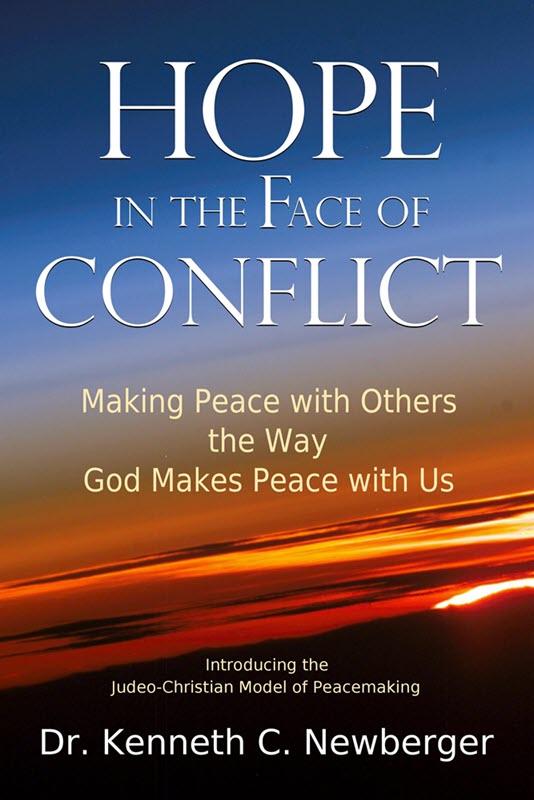
Greetings. My name is Dr. Ken Newberger. I hold a Ph.D. in Conflict Analysis & Resolution from Nova Southeastern University and a Master of Theology from Dallas Theological Seminary. I am the author of Hope in the Face of Conflict: Making Peace with Others the Way God Makes Peace with Us. For more than twenty-five years, I have helped congregations and couples move from conflict toward peace, from hurt toward healing, and from distance toward genuine connection. I have mediated conflicts within church boards, staff teams, and congregations, and have worked with more than 500 couples. My overall approach combines a solid biblical foundation with the best of modern research. If you are struggling in your marriage, there is hope. Learn more about how I can help you find your way back to each other.A Word About Christian Marriage Counseling
Christian marriage counseling integrates the truths of Scripture with proven principles of conflict resolution and relational healing. Rather than treating faith as irrelevant — or avoiding it altogether — Christian counseling views your faith as a powerful resource for restoring your marriage.
My approach is grounded in the Judeo-Christian model of peacemaking, that is, learning to make peace with others the way God makes peace with us. This model applies wherever conflict exists — including between husbands and wives. This is not merely theological theory. It is a practical process that works. In marriage, it helps couples:
- Break destructive cycles of conflict, withdrawal, and resentment
- Communicate with greater honesty, sensitivity, and compassion
- Rebuild trust after a lack of transparency, dishonesty, or relational distance
- Restore emotional, spiritual, and physical intimacy
- Develop a shared vision for the marriage God intended
Marriage Challenges in Washington, D.C.

Washington DC has the highest marriage-to-divorce ratio of any city in the country — 3.77 in 2024, nearly four marriages for every divorce. Marriage rates here also rank among the nation’s highest at 24.4 per 1,000 people. On paper, DC looks like a city where marriage is thriving. Talk to people who work with struggling couples, though, and the picture becomes more complicated.
Politics Has Started Coming Home
DC-based divorce attorney Cheryl New told Axios she has seen more couples splitting over political differences — and not just people who work in politics. Ordinary DC couples too. “It’s no longer ‘Who do you want for president?’” she said. “It branches into many other areas of how you have to relate to your spouse.”
Another attorney, Maria Simon, put it this way: “As long as the country itself is in this position, I don’t see why it wouldn’t be magnified at a more micro level and impact people’s marriages.”
Washington has always been political, but for many couples the atmosphere now follows them home. In other parts of the country, disagreements may stay disagreements. In DC, they can start feeling tied to identity, values, even friendships and career circles. That changes the emotional weight of ordinary conflict.
Two Careers, One Marriage, Not Enough Hours
Many DC couples are balancing two demanding careers at the same time. The schedules work. The logistics work. But the relationship itself can slowly get pushed to the edge of everything else.
A Harvard Business School study on dual-career marriages captured this dynamic well. One physician described how she and her husband handled responsibilities:
“I think especially because my husband and I do such a good job of making sure we share the responsibilities — it involves a lot of dividing and conquering and as a result we don’t see each other.”
That sounds familiar to a lot of couples in Washington. They are not constantly fighting. In many cases they are functioning quite well. They are just exhausted, overextended, and slowly becoming disconnected while trying to keep everything moving.
A Washington Post profile of a DC couple described resentment quietly building over household responsibilities and career pressure. What finally helped was not some dramatic breakthrough. It was simply deciding to stop chasing perfection and deliberately making time for each other again.
Simple idea. Hard to do in this city.
Far from Family, With No One Nearby
A lot of couples move to Washington for opportunity. Careers take off here. But there is often a trade-off that people do not fully appreciate until later.
Attorney Jamie Davis Smith wrote about this after moving to DC with her husband for work. “I love our life in Washington, DC,” she said, “but I wish we’d chosen to be closer to family instead of prioritizing our careers when deciding where to live.” After their daughter developed complex medical needs, the lack of nearby family support became much harder than they expected.
For many couples, DC initially pulls them closer together because they arrive here knowing almost nobody else. That can be a good thing. But when a difficult season comes — health problems, parenting stress, burnout, marital strain — there may be no support system close by. No relatives who can step in for a few days. No lifelong friends down the street. Over time the marriage ends up carrying more emotional weight than it was designed to carry alone.
The Spouse Who Has to Be Everything
Researchers at the Family Institute at Northwestern University have identified a pressure that shows up particularly sharply in cities like Washington:
“A big challenge in current marriages is this expectation that the person we’re partnered with is going to be our everything — our family, our best friend, our work mentor — but at the same time, they’re going to be enhancing us. So much pressure is put on a relationship.”
When couples live far from extended family and old friendships, spouses often end up carrying roles that used to be spread across an entire support network. Emotional support. Friendship. Career encouragement. Parenting help. Stability. That can work for a while. But eventually many couples discover that no marriage can carry all of that pressure indefinitely without strain showing up somewhere.
Getting the Help You Need
The couples who navigate Washington well are usually not the couples without problems. They are the couples who notice the drift early and address it before years pass. But even if tensions are high or you feel more like coworkers than spouses, Dr. Newberger can help.
Ready to take the first step?
Call 703-483-0031 to speak with Dr. Newberger without charge or obligation about your situation. Or, if you prefer, learn more about his process →