Chapter 10
Do You Control Anger
or Does It Control You?
Controlling anger in marriage comes down to reaction time, the space between what sets you off and how you respond. A deep breath, a few minutes to think, or a planned four-hour delay can keep one angry moment from doing lasting damage to your marriage.
Introduction

There are books galore about anger. In this chapter, I want to focus on a single concept: Reaction Time.
When author Stephen Covey came across this concept, he said it significantly influenced the rest of his life. It is the simple idea that there is a gap or a space between stimulus and response and that the key to both our growth and happiness is how we use that space.1
This concept particularly applies to expressing anger because the space between trigger and response, for many people, is virtually nonexistent. This is the reason Thomas Jefferson said, When angry, count to ten before you speak. If very angry, count to one hundred.
Three Illustrations

1. At the 2022 Academy Awards ceremony, actor Will Smith slapped presenter Chris Rock in the face after Rock joked about the short hair of Smith’s wife, Jada. (Rock said he did not know about her medical condition.)
The next day Smith apologized. He wrote, Jokes at my expense are a part of the job, but a joke about Jada’s [his wife’s] medical condition was too much for me to bear and I reacted emotionally. I would like to publicly apologize to you, Chris. I was out of line, and I was wrong. I am embarrassed…
Had there been more space between the trigger (Chris Rock’s joke) and Will Smith’s response, things would almost certainly have had a different ending. Instead, Smith later felt compelled to apologize for acting impulsively. If Rock had pressed charges, Smith could have been arrested and charged with battery.
Smith resigned from the Academy, facing possible expulsion. The Academy banned Smith from attending “any Academy events or programs, in person or virtually,” for ten years. All this because he didn’t control his feelings in the moment.

2. Charles, a man sentenced to life for murder, put it this way: What a guy’s in jail for probably only took a few seconds. That’s not the whole person. That’s just a couple of minutes out of a person’s life.2 How often must this man look back at that moment in regret, wishing he hadn’t acted/reacted as impulsively as he did?

3. A Democratic State Senator from Rhode Island, Joshua Miller, was arrested in June 2023 for keying a car with a Biden Sucks bumper sticker. The following month, he told reporters outside the 3rd District Court in Warwick, R.I., I’m disappointed in my behavior and lack of judgment. In a blink of an eye, I exhibited a lack of self-control that has impacted my reputation.3
Lesson to Be Learned
Those who cannot control their anger in the moment subject themselves to the control or decision of others, including being taken to court, imprisoned, fired from work, estranged from family and friends, served divorce papers, etc. If we don’t learn how to manage our anger, we are, as one therapist put it, “at the mercy of anyone who provokes us.”
The critical question is, “How can I put more space between what triggers my anger and my response to it?”
Discuss
Is Anger Hurting Your Relationship?
Sitting together, take turns saying whether each statement is true for you, and explain why.
- There is too much anger in our relationship.
- I do not share things with you because I am afraid of your reaction.
- I walk on eggshells around you.
- Even when we are not fighting, I cannot relax because I don’t know what will set you off the next time.
- I carry a lot of resentment because of the heavy-handed way you treat me.
- After things calm down, I often regret what I said or did out of anger.
The purpose of this chapter is not only to help make things better. The focus is also to help prevent things from getting worse.
Too much anger in a marriage can seriously damage it. The rest of this chapter is intended to help “stop the bleeding.”
Contemplate
Strategies to Bring Your Anger Under Control
Strategy 1. Pause, Then Re-engage
- a.Take a deep breath.
- b.Physically, take a step back or push your chair back (as a symbolic move) to remind yourself to not react emotionally without thinking.
- c.Explain your need for a pause. A simple way to add time and space between your spouse’s comment and your response is to say so. For example,
I need to take a few moments to think about this before I respond.
If you feel pressured to answer immediately, you should repeat the sentence.
- d.Once you have reflected on the issue, re-engage in the conversation. Say,
What you just said made me feel defensive. If I respond defensively, it will only make things worse.
Then ask, Would you please restate what you just said without attacking me? If that doesn’t work, excuse yourself and leave.
- d-2.OR, put time and space between the remark and your response by asking a question. When your spouse’s comment makes you feel defensive, turn the focus back onto him/her by using one of these 4 phrases:4
That’s interesting . . .
tell me more.
why would you say that?
why would you ask that?
why would you do that?
This approach not only buys you more time to think about your answer but will also increase understanding of your spouse (which may lead to less conflict).
- d-3.A variation of the above is to add a positive statement about yourself as you respond. For example,
Wife: You never put your things away.
You: That’s interesting. I consider myself a neat person. Why would you say that?
Strategy 2. Prepare, Then Engage

If you know that a particular discussion will occur, take the time in advance to think through and be ready with a response. In this instance, you are adding time and space before being triggered.
Strategy 3. Engage, Pause, Engage
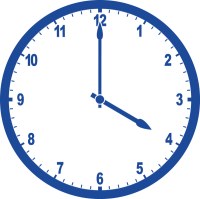
The Four-Hour Delay5
- a.Tell your spouse how many issues, frustrations, or complaints you want to discuss.
Jane, I have two issues I want to discuss with you.
- b.Identify the issues you want to discuss.
You never clean the kitchen.
I don’t like being home alone as often as I am due to all your social commitments.
Do not elaborate or go into any further detail.
- c.List an equal number of appreciations you have for your spouse, plus one. If you have 2 complaints, come up with 3 compliments.
Jane, I love the way you snuggle with me in bed.
I appreciate you making me breakfast in the morning.
I always enjoy my time with you, even if we just hang around the house.
- d.Share those appreciations right then and there.
- e.During the interim between listing and discussing the problem, think through what you want to say without putting your spouse on the defensive. For example, think about using “I” statements, not “you” statements.
I sense that my feelings are no longer important to you,
not, you’re as cold as an ice cube.
- f.Four hours after the initial conversation, discuss the issues you initially raised.
The Value of the Four-Hour Delay
- (1)It interrupts the typical cycle of conflict by separating the initial complaint and the response by four hours.
- (2)The later discussion won’t catch either of you off guard.
- (3)It allows each of you to process the issue to be discussed in advance.
- (4)It includes positive affirmations about your spouse to counterbalance the complaints.
Summary
You will have time to consider the topic objectively instead of reacting immediately with negative emotions. This can change the tenor of the discussion for the better.
Strategy 4. Don’t React at All (the Permanent Pause)
I assume you are aware that your anger leads to actions which, in turn, cause problems in your marriage. I am also assuming that you would like to change this pattern but haven’t been able to thus far. Here is a four-step approach that results in no action being taken.6
Step 1. Accept the Thought
Rather than fight your thoughts and feelings, accept the fact that they come and go, and you don’t have to respond to them. You don’t have to fight against them. You don’t have to block them from your mind. In fact, the more you fight having them, the more you “feed the beast,” that is, the stronger and more entrenched they become. Instead, simply accept their presence.

Dr. John Nash, a Nobel Prize winner in the field of economics, suffered from schizophrenia. His story is recounted in the film A Beautiful Mind. In the movie, shortly before he was awarded the prize, Nash remarked, I take the newer medications but I still see things that are not here. He then added, I just choose not to acknowledge them. We can do the same when it comes to the thoughts that enter into our minds. We can accept that they are there but we don’t have to react to them.
This is similar to what George Orwell wrote in his 1933 memoir, Down and Out in Paris and London. When he was nearly out of money, he described what went through his mind. You think vaguely, “I shall be starving in a day or two – shocking, isn’t it?” And then the mind wanders to other topics.
Even the most dramatic thought, urge, or emotion does not have to be responded to. Admit that it’s there and then let it pass by without acting on it, like observing a fast-moving afternoon storm. It comes. And then it goes away.
Step 2. Realize You Are Not Your Thoughts
When you experience anger, you can quickly view it in one of two ways:
- (1)I am frustrated right now versus
- (2)I notice that I am frustrated right now, or I am having the thought that I am frustrated right now.

In the first case, you are more likely to act out of frustration because there is no distinction between you and your feelings. They seem like they are the same.
By contrast, noticing you are feeling frustrated reflects the reality that you are more than that feeling. There is the feeling; then there is you. Having a bad thought does not make you a bad person if you choose not to put yourself under the control of that thought.
One therapist wrote, No thought is problematic in and of itself. Our thoughts only become problematic if we fuse with them! (that is, our thought and action become one). We can observe a thought or emotion without acting on it because we are greater than any thought or feeling.
Consider the book Bad Men Do What Good Men Dream by forensic psychiatrist Dr. Robert I. Simon. He concluded that virtually every human being has ugly, hateful, even murderous thoughts. But only “bad men” act upon them. The rest of us let those thoughts and emotions pass by without fanfare.
The journal entry of one high school student who suffered from bouts of depression and outbursts of anger is also illustrative. Through therapy, the teenager reached a point where he could notice his thoughts and emotions but not feel compelled to respond to them. He wrote, Amazing realization: I can feel this change – my thoughts and feelings come up, sometimes big, sometimes bad – but they used to feel like who I was. Now they’re becoming more like an experience I’m having, not who I am. They don’t define who I am.7
Step 3. Do Something Else
Step 3 is an activity step, that is, you need to physically engage in a behavior that is altogether different from what you are thinking. Dr. Schwartz describes Step 3 this way.
You need to actively place your attention on something of your choosing that is healthy, constructive – and beneficial for you even while (and despite the fact) the deceptive thoughts, impulses, urges, sensations and cravings are present and screaming for you to act on their maladaptive behalf…. It’s not what you think or how you feel that matters, it’s what you do that counts. You are not trying to make the feelings go away… your goal is to direct your attention toward a healthy, wholesome activity while the thoughts, impulses, urges, and sensations are present.8
The activity you choose needs to be something you enjoy. Listen to music, play an instrument (if you have one), cook, exercise, talk to a friend, walk your dog, play with your pet, engage in a hobby, shoot some hoops, ride your bike, read, play a computer game, (for some) clean up an area in your home, etc.
Whatever the items, create this list in advance. This change of behavioral focus will interrupt your ability to quickly travel down the well-worn grooves (established programming) of your brain. While we cannot erase our distorted thoughts, we can create new, healthier ones. We can rewrite the script.

The 15-Minute Rule
Try to stay occupied in your chosen activity for 15 minutes, or as long as you are able. Putting time between the urge and the action lowers its intensity and makes it easier to let it pass.
Step 4. Replace the Anger with Your Vision of Something Better
It is important to have a positive vision of what you want to replace your anger with. What do you envision your ideal self to be? If you no longer want to react angrily to your spouse, for example, how do you see yourself reacting? What do you want to do to replace what you have been doing? Having an image of a healthier you will make it easier to refrain from old patterns of behavior. You now have a goal toward which to aim.
Summary
When you observe what you are thinking or feeling (“the noticing self”), you are engaged in a process that separates them from action. It increases the time between trigger and response. This approach also makes clear who or what is in control. Is it my thought or is it me? The answer should be self-evident.
Strategy 5. Control Your Imagination

Here is the story of one man, a “rageaholic,” who had struggled with anger his entire life.
I’m now 65 years old and on probation for choking my 20-year-old granddaughter. She had been yelling at my wife and refused to shut up. As she lay there on the floor unconscious, I thought I’d killed her. I never felt such overwhelming fear and shame in my life...
My granddaughter was physically okay. However, I was arrested and my wife left me. My adult children refused to speak to me. I was referred by my psychiatrist to a men’s anger group that used the ABC method… I simply did not give in to the impulse to express anger, no matter what.
One of the crucial steps for me was turning off my violent fantasy life. I have learned to change the channel that plays violent revenge fantasies…. I distract myself. I force myself to repeat prayers or phrases over and over – sometimes out loud if I am in the car. I think of pleasant scenes, real or imagined. Sometimes I will just pick up something and force myself to read it to get the channel changed…
I have given up expressing rage and anger completely. My wife noticed the change and came back home. All but one of my children are speaking to me… I now can do what I never thought possible: Lose. Be wrong. Walk away quietly. If I can do it, so can you.9
As Proverbs puts it, “One who is slow to anger is better than the mighty, and one who rules his spirit, than one who captures a city.”10
If anger has been a problem in your life, I hope one or more of these strategies will work for you.
1. Covey, Stephen (2004). The Seven Habits of Highly Effective People, p. 310. ↩
2. Diggs, C. (1996). H. Zehr (Ed.), Doing Life: Reflections of Men & Women Serving Life Sentences. ↩
3. Providence Journal, July 18, 2023. ↩
4. Four Magic Phrases You Can Use to Respond to Anything (video). ↩
5. I came across this exercise (heavily edited here) on the blog of psychologist Dr. Keith Witt. ↩
6. Schwartz, Jeffrey M., Brain Lock (1996, 2016), and You Are Not Your Brain (2011). ↩
7. Siegel, Daniel J., Mindsight, chapter 5. ↩
8. Schwartz, Jeffrey M., You Are Not Your Brain (2011), chapter 11. ↩
9. Hightower, Newton, Anger Busting 101, preface. ↩
10. Proverbs 16:32. ↩
Struggling in your marriage? There is hope.
Call Dr. Ken Newberger at 561-490-4991 to talk about your situation free of charge. Or, if you prefer, learn about his unique process.