Chapter 13
How Do You Know If Your Spouse Is Truly Sorry?
A sincere apology in marriage names the wrong, accepts full responsibility for it, and expresses remorse for the harm it caused. It comes without excuses or self-defense. The surest sign your spouse is truly sorry is a willingness to stand defenseless before you.

Inadequate Apologies
You exit a local shopping mall and walk to your parked car. As you approach, you feel shocked when you see a dent. It looks like an expensive repair. You then notice a folded piece of paper under your car’s windshield wiper. It reads, I just backed into your car. I am really very sorry. The people who witnessed the accident are watching me. They think I am writing down my name and address. I’m not. Good luck! The man said he was sorry, but was he really?
As it relates to people we know, especially our spouses, ruptures in relationships often fail to heal because the “apology” is woefully insufficient. As the title of one popular song put it, “Sorry Seems to Be the Hardest Word.”1
Below, I highlight five inadequate apologies. Here is what to avoid.
1. The Non-Communicated Apology

Dear Brenda,
I am sorry for lying and cheating on you, the girl who gave me her full heart with full trust. It was a tender and precious gift, which I did not properly value. I am sorry that I slept with prostitutes at risk of getting diseases that may have damaged your health and put your life in danger. I am sorry that I tried to cover up my lies and deceptions because I was too afraid to face up to the consequences. I am sorry for the pain I have caused. I am sorry for manipulating the situation in order to gain control. My fear was that I would be deserted, that I would be abandoned if I shared my truth. Now I am on an island. Alone. I desire to shine in the truth once again. I am so so sorry.
Neil
This confession sounds sincere. The problem is that the intended recipient didn’t receive the confession. Instead, the person posted it online in the “Apology Room,” a website that allows people to anonymously publish those things for which they are sorry. These are confessions without recipients. This is a “non-communicated apology.” Whether someone posts it online, shares it with another person to whom an apology is not owed, or just feels it in one’s mind and heart, a non-communicated apology is inadequate and no apology at all.
In marriage, for an apology to be effective, make it directly to your spouse.
2. The “Get-Out-of-Trouble” Apology
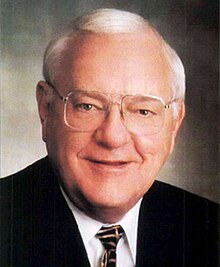
Consider the written apology of the former governor of Illinois, George Ryan. In April 2006, the jury found him “guilty on all 18 counts of racketeering conspiracy, mail fraud, lying to the FBI, obstructing the Internal Revenue Service and filing false tax returns.” On August 21, 2007, a federal appeals court in Chicago upheld the conviction, declaring that the evidence against Ryan was “overwhelming.”2 On November 6, 2007, the day before he entered prison to serve a six-and-a-half-year sentence, the seventy-three-year-old Ryan stood before reporters and said,
Tomorrow I embark on a new journey in my life… But I do so with a clear conscience. And I have said since the beginning of this 10-year ordeal that I am innocent and I intend to prove that.3
In light of his clear conscience and to prove his innocence, Governor Ryan took his case to the U.S. Supreme Court. The court rejected his appeal. This was followed by a formal request to President Bush to commute his sentence.
On December 12, 2008, imprisoned former Governor Ryan offered his first public apology. His lawyer read the apology to the press. Here is an excerpt of what the governor wrote.
I must say something that I have known in my heart has been a long time coming. And that is a truly heartfelt apology to the people of Illinois. It has been a difficult journey for me to get to this point, as I truly believed in my service to the people, but it was less than my best, and for that I am sorry….4

Opinions from Chicago newspaper readers were written online. Here is a sampling.
I think it is hard to believe in the sincerity of an apology coming at the time when commuting of his sentence is being considered.
Tell inmate Ryan to save his meaningless apology. It is just an attempt to bolster the ongoing attempt for early release. An apology with any level of sincerity would have come long, long ago. This criminal needs to serve his full sentence, regardless of the suffering he has caused his family. He should have thought of the consequences before he abused his position and broke the law.
This apology is totally contradictory to every single statement about his conviction made until now. He has not been the LEAST bit contrite until now. Therefore any reasonable person can conclude this apology is insincere and completely self-serving.
Wonderful apology. I’ll accept it when he’s released from prison, having served his full term. Until then, his apology means nothing. It sounds like a pathetic and insulting attempt to get out of prison early. If he truly is sorry to all the people he hurt, he can tell us in five-and-a-half years.
Good. Now let him demonstrate just how really sorry he is, by being a man and serving his entire sentence without so much as another peep out of him.
Ryan offered his apology only after claiming to have a clear conscience, only after proclaiming his innocence for so many years, only after every legal means to have his conviction overturned failed, and only after he made a formal request to President Bush to commute his sentence (which the president did not do).
In marriage, for an apology to be effective, accept responsibility for what you have said or done.
3. The Conditional Apology

A common apology is, “If I offended you by my actions, I am sorry,” or “I am sorry if you were upset by what I said.” The key word in such statements is the word “if.” The “if” in these sentences changes the whole meaning of the “apology.” Without it, the above apologies would read, “I am sorry for my actions. I am sorry for what I said.” The focus would be on the person offering the apology.
The problem with “if” statements is that they take the focus off the offender’s words or actions and make it about the other person’s reaction. It is like saying, “I am not actually sorry for what I said but by how you interpreted it.” The conditional “if” is like stealing someone’s car, getting caught a week later, and saying to the vehicle’s owner, “I am sorry if you were inconvenienced” (but not sorry for the theft). If you pay close attention to many of the apologies you hear today, you may be surprised at how frequently people use the word “if.”
In marriage, for an apology to be effective, get rid of the “if.”
4. The Apology with an Excuse

When we do something we shouldn’t, we tend to hide behind excuses. The problem is, excuses separate us from the acts we commit. We shift the blame for our behavior or inappropriate words to something or someone else.
I’m sorry for cursing you out, but work has been stressing me out.
I’m sorry I stole clothes from your department store, but I have an impulse-control disorder.
I’m sorry I wasn’t faithful to you, honey, but you were not meeting my needs.
I’m sorry that I cheated on the exam, but my parents pressured me to get good grades.
I’m sorry I hit you, sweetheart, but you got me so mad.
I’m sorry I lied on my application, but times are tough and I needed this higher-paying job.
Since excuses have the practical effect of negating responsibility for one’s actions, there is little point in offering them. It may be more prudent not to offer such an “apology” at all.
In marriage, for an apology to be effective, leave out the “but.”
5. The Bulletproof Vest Apology
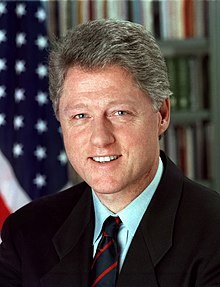
When allegations were surfacing about his relationship with a White House intern, Monica Lewinsky, President Clinton forcefully asserted on January 26, 1998,
I want to say one thing to the American people. I want you to listen to me. I’m going to say this again: I did not have sexual relations with that woman, Miss Lewinsky. I never told anybody to lie, not a single time. Never. These allegations are false.5
As the evidence mounted that there was a sexual relationship, on August 17, 1998, President Clinton felt compelled to make a brief televised speech to the nation. He said, in part,
Indeed, I did have a relationship with Ms. Lewinsky that was not appropriate. In fact, it was wrong. It constituted a critical lapse in judgment and a personal failure on my part for which I am solely and completely responsible.… I know that my public comments and my silence about this matter gave a false impression. I misled people, including even my wife. I deeply regret that.6
Shortly thereafter, on September 11, 1998, President Clinton gave a speech during a White House prayer breakfast. At this time, Congress had just received the independent counsel’s report, which laid out possible grounds for impeaching the president, including perjury and obstruction of justice. At the prayer breakfast, the president said, in part,
I don’t think there is a fancy way to say that I have sinned. It is important to me that everybody who has been hurt know that the sorrow I feel is genuine: first and most important, my family; also my friends, my staff, my Cabinet, Monica Lewinsky and her family, and the American people.…
Now, what does all this mean for me and for us? First, I will instruct my lawyers to mount a vigorous defense, using all available appropriate arguments. But legal language must not obscure the fact that I have done wrong. Second, I will continue on the path of repentance, seeking pastoral support and that of other caring people so that they can hold me accountable for my own commitment.7

In his reaction to the speech, Dan Thomasson, bureau chief of the Scripps Howard News Service, responded with bewilderment:
At the same time he is asking us to forgive a poor sinner he is announcing he will launch a ‘vigorous’ defense of his actions.… Wait a minute! How can you have it both ways?
Thomasson said that if the president was truly sorry, he should go before Congress with hat in hand, i.e., with contrition, and not with a legal defense team.
People can debate the path President Clinton took or could have taken. The legal considerations undoubtedly complicated this case. The larger point to be made here, however, is that true apologies are incompatible with attempts to shield one from the consequences of one’s offenses.
In marriage, for an apology to be effective, don’t defend yourself.
The Components of a Genuine Apology
A genuine apology has three essential components. The person offering it:
- Names the wrong done.
- Takes full responsibility for it.
- Expresses remorse for the harm done.
For example
“I betrayed you when I spoke ill about you behind your back. I have no excuse for my behavior. I am sorry for the pain I caused you.”
A Genuine Apology Needs to Be Person to Person
It is important to make apologies directly to the other person. Consider the dramatic case when an expected face-to-face apology did not happen. The context was one of sexual abuse that occurred to boys at a Canadian religious school by one of the adult Brothers. Years later, the archbishop offered an official apology to a gathering of adults. In the midst of the archbishop’s apology, one man yelled out,
I don’t want an apology from you. I want an apology from the Brother that did me. He ruined my life, that dog! I don’t need an apology from you. You had nothing to do with what he did to me. I want an apology from him!8
A Genuine Apology Overcomes Fear and Shame
The human inclination to avoid being identified as a wrongdoer is incredibly strong. Why? For two reasons.
Fear. Fear is a powerful motivator for people not to admit their guilt. The trusted accountant with a secret gambling problem who is embezzling funds from his employer says nothing. What would happen to him if he did? The forty-year-old man who has an affair, even if for one night, says nothing. Would his wife divorce him and shatter his comfortable lifestyle if she knew?
The fear of being found out, the thought of placing our fate in the hands of another, is what frightens us so. If we confess, we lose control of what might happen to us. Consequently, we will go to extraordinary lengths to avoid becoming so open to attack.
Shame. Shame, more than guilt, is the second reason a genuine apology is hard to make. Whereas guilt focuses on one’s behavior, shame focuses on one’s identity. The difference between guilt and shame can be captured as, “I did a horrible thing” (guilt) versus, “I am a horrible person” (shame).
With guilt, the focus is on one’s action. With shame, the focus is on oneself. Shame is the more painful emotion because there is little separation between the person and the act. Not only does the uncovering of a bad deed occur, but it also exposes a bad person. The thought of being “unmasked” and becoming an object of scorn or ridicule is unbearable.
Whereas a guilty person seeks forgiveness, healing, and freedom based on admission of the misdeed, a person filled with shame experiences an ever-shrinking and isolated world. One rabbi gave this description:
[A man] lies awake at night and thinks about it [his sin]; his soul cries out in the darkness; but in the light of day, in the eye of others, he seems happy and content. [Yet despite the inner turmoil, these are matters] he does not dare bring to his lips.9
How Do You Know If Someone Is Really Sorry?

The hallmark of a genuine apology is that there is a full acceptance of the wrong committed. This means the one apologizing stands defenseless. It means putting one’s embarrassing side on display. It also means placing oneself at the mercy of the other.
As soon as someone offers an apology, our immediate destiny no longer rests solely with ourselves. Our immediate destiny now depends on the one who was hurt. Ironically, an apology represents a complete reversal of power. Weakness and vulnerability shift from the injured party to the one who caused the injury, while the injured party assumes a position of strength. How the offended party might use his or her newfound power is anything but certain. This is why so many people avoid apologizing without some defense or excuse. When your spouse apologizes to you, use that power gently, because how you respond will decide whether he or she risks being that vulnerable again.
Hence, the genuineness of an apology directly relates to the extent one is willing to say that one’s words or actions have caused harm, even if the confession makes one vulnerable to criticism and attack. The degree to which I, the guilty party, am willing to surrender my fate to the person I hurt indicates the extent to which I am sincerely sorry for the wrong I have committed. The more I am willing to give myself over to the offended party and suffer the due penalty of my transgression, the more genuine others will consider my apology to be.
To put it another way, a sorry without vulnerability, a sorry without the willing surrender of control concerning the outcome of my bad behavior or careless words, a sorry that doesn’t yield my immediate fate into the legitimate hands of the one I hurt, is not sorry enough.

Exercises
Application to Marriage
- A.When it comes to apologizing (check all that are true):
- ____1. I have difficulty apologizing to my spouse.
- ____2. Even though I may feel regret for my actions, I usually don’t communicate those sentiments to my spouse.
- ____3. On many occasions, I quickly apologize to my spouse to avoid getting into a full discussion of what I did.
- ____4. I usually apologize to my spouse only if s/he says s/he is offended by my words or actions.
- ____5. When I apologize, it is usually accompanied by a justification or excuse.
- ____6. I do not fully admit the full extent of my wrongdoing because I am afraid of the consequences of doing so.
- ____7. I do not apologize to my spouse because s/he will hold it over my head.
- ____8. I do not apologize because I already feel bad about myself and can’t handle putting myself in that vulnerable position.
- ____9. I have had a bad experience when I apologized in the past.
- ____10. There is something for which I should apologize to my spouse but have not yet done so.
- ____11. I tend to apologize to my spouse whether I am right or wrong, just to keep the peace.
- B.Discuss the reason you checked each box you did.
- C.Discuss creating a mutual goal of becoming more transparent, even when you do wrong, to build a closer relationship. In this vein, the poet Alexander Pope (1688-1744) wrote,
A man should never be ashamed to own he has been in the wrong, which is but saying, in other words, that he is wiser to-day than he was yesterday.10
- D.A true story. An attorney talked about a young widow he represented in a malpractice suit. The case eventually settled, and the widow and her children received financial compensation for their loss. The attorney recalled,
As we left the courthouse after the hearing, she began to rage. I thought she was disappointed in the apportionment ordered by the court or that she regretted settling rather than trying the case. But she denied that either of these feelings was the source of her hostility. She was angry that none of the doctors had ever said he was sorry that his conduct had contributed to her husband’s death. She experienced this omission as another injury, moral harm added to professional malpractice. She said that if the doctors had apologized, she would have felt more able “to heal.”
- 1.Discuss this case. How does it strike you?
- 2.Why was an apology from the doctors so important to this woman? Why was it so important to her healing?
- 3.Why are apologies from your spouse so important to you?
- 4.What can each of you do differently in the future?
- E.Share the most memorable apology you ever received. How does that experience (or lack thereof) impact your willingness to apologize?
For Practice
Below are three scenarios where a fictitious offense occurs. Take turns and practice making a sincere apology.
When finished, talk about any difficulties you had in offering a sincere apology. Practice this exercise enough times that you each feel confident in your ability to offer a real apology. Then, be sure to use what you have learned in real life with each other.
The Three Scenarios
Scenario 1
You and your spouse have agreed upon a monthly spending budget. You knowingly bought an item “on sale” that was way over budget.
Scenario 2
You and your spouse go to a social gathering. You spend most of the evening talking with a particular person of the opposite sex and ignore your spouse.
Scenario 3
You and your spouse had agreed on how much TV your young children would be allowed to watch. But you fall back to your old ways and let them watch to their heart’s content.
Once a sincere apology has been offered, the next question is whether to forgive. That’s the subject of the next chapter, “To Forgive or Not to Forgive?”
1. John, Elton, and Bernie Taupin, “Sorry Seems to Be the Hardest Word,” on the album Blue Moves (1976). ↩
2. United States v. Warner, 498 F.3d 666 (7th Cir. 2007), decided August 21, 2007. The court wrote that the evidence supporting the jury’s verdict was overwhelming. The full appeals court declined to rehear the case on October 25, 2007, and the U.S. Supreme Court declined to hear it on May 27, 2008. ↩
3. Ryan, George, statement to reporters outside his home in Kankakee, Illinois, November 6, 2007, as reported by the Associated Press. He reported to the federal prison in Oxford, Wisconsin, the next morning. ↩
4. “Ryan offers ‘heartfelt’ apology to state,” UPI, December 12, 2008. The statement was read to reporters by Ryan’s lawyer, former Illinois governor James R. Thompson. ↩
5. Clinton, William J., remarks at the White House, January 26, 1998. ↩
6. Clinton, William J., “Address to the Nation on Testimony Before the Independent Counsel’s Grand Jury,” August 17, 1998, Public Papers of the Presidents of the United States: William J. Clinton, 1998, Book II, 1457-58. ↩
7. Clinton, William J., “Remarks at a Breakfast With Religious Leaders,” September 11, 1998, Public Papers of the Presidents of the United States: William J. Clinton, 1998, Book II, 1565-66. ↩
8. Alter, Susan, Apologising for Serious Wrongdoing: Social, Psychological and Legal Considerations, Final Report for the Law Commission of Canada (May 1999). The man spoke out during Ottawa Archbishop Marcel Gervais’s official apology to former students of St. Joseph’s Training School in Alfred, Ontario, which was run by the Brothers of the Christian Schools. ↩
9. Soloveitchik, Joseph B., On Repentance, arranged by Pinchas H. Peli, “The Power of Confession,” 91-94. The bracketed words are added for clarity. In the original, the closing phrase comes from the sentence that begins the passage. ↩
10. Pope, Alexander, “Thoughts on Various Subjects” (1727). ↩
Struggling in your marriage? There is hope.
Call Dr. Ken Newberger at 561-490-4991 to talk about your situation free of charge. Or, if you prefer, learn about his unique process.